
Reader Reaction Chapter 23-24


The ending of this novel was sweet and the last chapter was maybe a little unnecessary. Dimmesdale finally confesses about his sin upon the scaffold. He reveals the scarlet letter that he has imprinted on his own flesh. This was due to the shame he had to bear. His action and confession finally sets Hester and Pearl free. Hester now has freedom in her life, with the opportunity to live outside the harshness of society. She can seek give peace with her own heart. She dies alone, but can die mostly happy. She has fulfilled not only her duties, but also her love, ensuring that her daughter will continue her legacy.
Ending with Dimmesdale’s confession and death could have sufficed. The last chapter basically told the aftermath of the climax. Years later, Hester Prynne goes back to the society that shunned her for so long. She goes back to her cottage on the outskirts of town. She goes back to wearing her scarlet letter. Even though she is free, her adultery makes her feel bound. It has become a part of her. She can't actually feel free unless she's atoning by wearing the A.
The novel leaves us with a final picture of Hester and Dimmesdale's gravestone. They have been buried near one another but not directly next to each other. “And, after many, many years, a new grave was delved, near an old and sunken one, in that burial-ground beside which King’s Chapel has since been built. It was near that old and sunken grave, yet with a space between, as if the the dust of the two sleepers had no right to mingle. Yet one tombstone served for both” (Hawthorne 235). If Hester and Dimmesdale can be buried near each other, it suggests that the community has, in many ways, forgiven them for their adultery. The Puritan society has come a long way from the start of the novel. They had ostracized Hester, but eventually came to terms with her. They were able to partially forgive the sin, since Hester and Dimmesdale are in the same tombstone.
“But there was a more real life for Hester Prynne here, in New England, than in that unknown region where Pearl had found a home. Here had been her sin; here, her sorrow; and here was yet to be her penitence. She had returned, therefore, and resumed,—of her own free will, for not the sternest magistrate of that iron period would have imposed it,—resumed the symbol of which we have related so dark a tale” (Hawthorne 234). This passage concludes the book’s exploration of the theme of individual identity contradicting with social judgments. After being gone for many years, Hester has returned to her former home. She resumes wearing the scarlet letter because she feels her past is an important part of her identity. She has overcome adversity and has gained numerous life experiences. The letter is a symbol for all that. She now has her own identity, and can be seen as an example for others. She is an example of restitution.
My gossamer thread is about the motif of secrecy in The Little Prince. This motif can also be seen in The Scarlet Letter.
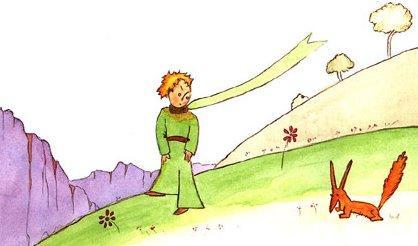
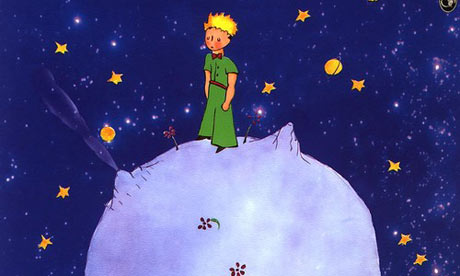
In The Little Prince, the little prince comes into contact with many characters while he is visiting Earth. All the characters the little prince encounters openly explain to him everything about their lives. The little prince finds that on Earth, all true meanings are hidden. The little prince, on the other hand, acknowledges that the most important qualities in life are invisible and mysterious. He constantly asks questions instead of giving answers. This is similar to how Pearl questioned Hester about the scarlet letter and the Black Man. In The Scarlet Letter, Dimmesdale hides the secrecy of sin inside of himself. He too has a mark like Hester. Although he refuses to confess and be punished, his sin ultimately marks his body even more permanently than either Hester's scarlet letter. The scarlet letter can be taken off, but Dimmesdale's mark is with him until he dies. Hester and Dimmesdale chose to keep their sin a secret from others, and both of them suffer because of it, instead of telling the truth. The prince eventually gets bitten by a snake. The snake said that if he was bitten, he would be able to go back to his planet. But, once he gets bitten, he dies. The snake can be compared to Chillingworth since both these characters trick another character. The little prince and Dimmesdale eventually die because of the trickery.

No comments:
Post a Comment